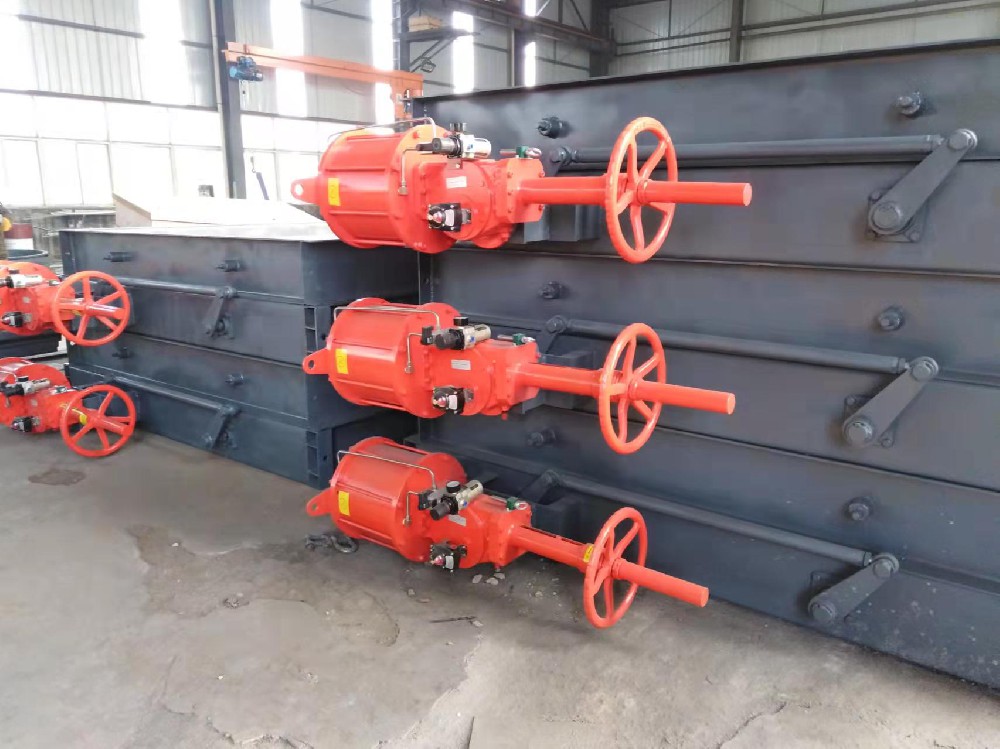
Image: Shutoff damper door (site archive)
Shutoff damper doors are key isolation devices in power plant boiler flue and air ducts and various industrial pipelines, operating either with other equipment in interlock or standalone. Understanding their classification and structural features is the first step to correct selection.
1. Classification
· By shape: rectangular and round shutoff damper doors, matching rectangular and circular ducts;
· By actuation: manual, electric and pneumatic — electric types interlock with actuators for remote control and automatic switching;
· By manufacturing process: cast and welded;
· By material: cast iron, carbon steel, stainless steel and nickel-based alloy, selected by flue gas temperature and corrosiveness (e.g. before/after desulfurisation).
2. Structure
A shutoff damper door mainly consists of the frame, blades, seal strips, main shafts, bearings, shaft seals, crank-link mechanisms and the actuator (optional).
Frame: formed by steel plate pressing, section-steel welding or casting for overall rigidity; blades: streamlined for low flow resistance and flexible operation; seals: specially designed elastic sealing between blades and between blade and frame achieves a sealing rate above 99% after closing (99.5%+ available on special order); bearings: purpose-made sealed bearings with self-aligning compensating bearings accommodate thermal growth of long shafts; linkage: giant dampers use double-arm heavy-duty crank-link mechanisms for synchronous multi-blade action; actuation: direct or remote transmission, or user-configured, flexibly paired with electric or pneumatic actuators.
We manufacture rectangular and round shutoff damper doors, control dampers and isolation gates, customizable by duty, material and sealing class — contact us for selection advice.