Duct Expansion Joints: Metallic & Non-Metallic Expansion Joints for Flue Gas and Air Duct Systems
Expansion joints (compensators) are essential components of power plant flue gas and air duct systems. Cold air ducts, hot air ducts, flue ducts, and equipment such as dampers, fans and air preheaters all undergo thermal movement in operation, while fan vibration and foundation settlement add misalignment at interfaces. Without expansion joints to absorb this movement, duct welds and equipment nozzles would be torn apart. This article introduces metallic and non-metallic expansion joints, their structures, applications and selection points.
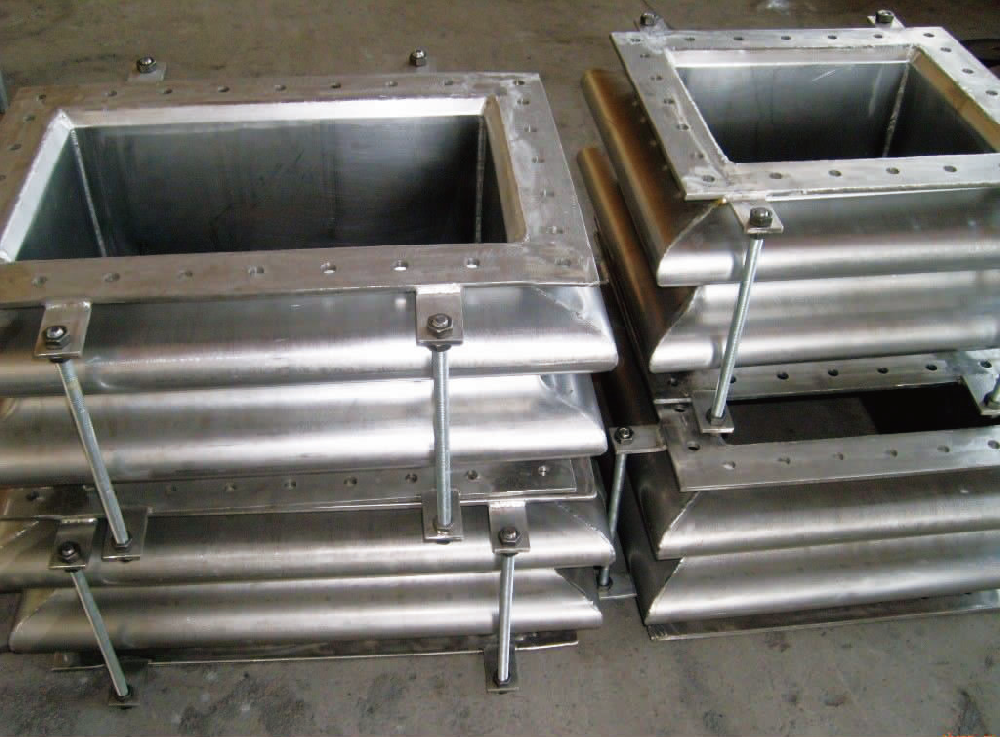
Metallic Expansion Joints
Metallic expansion joints are built around multi-ply thin-wall stainless steel bellows, with end flanges and a flow liner. Large rectangular duct sections use rectangular bellows with the number of convolutions set by the required travel, plus tie rods to limit over-deflection.
Features and applications:
- Good temperature and pressure capability for hot air and flue gas ducts
- Absorb axial movement plus limited lateral and angular deflection
- Reliable pressure sealing for pressurized or negative-pressure systems
- Typical locations: fan inlet/outlet, around steam air heaters, duct penetrations, either side of dampers
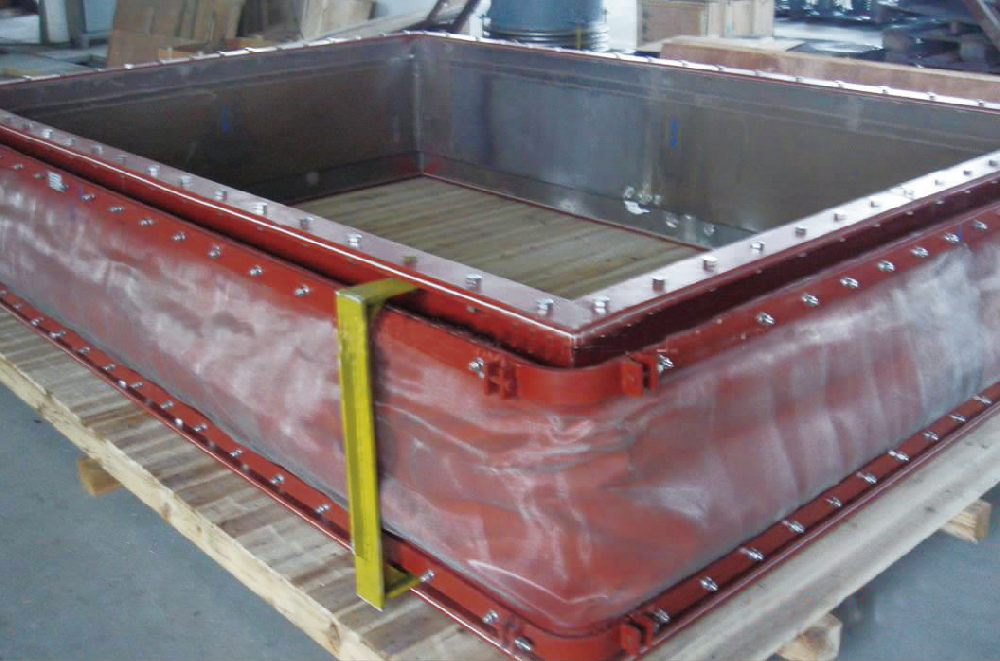
Non-Metallic Expansion Joints
Non-metallic expansion joints consist of fluoro-rubber/silicone skins laminated with glass-fiber cloth and insulation felt, clamped between steel frame flanges.
Features and applications:
- Absorb large 3-D movements (axial, lateral, angular) — far more travel than a metallic joint of the same size
- The soft skin transmits almost no force or vibration, isolating fans and other equipment
- No rigid torque transfer; friendly to interface flanges; easy to install and replace, maintenance-free
- Skin materials selectable for corrosion and temperature — ideal for FGD inlet/outlet, low-temperature large-movement ducts and ash conveying lines
Selection Points
- Material by medium temperature: high-temperature flue favors metallic bellows or high-temperature skins; low-temperature large-movement duty favors non-metallic
- Calculate movements: axial/lateral/angular amounts and directions, with margin
- Consider system pressure and tightness: bellows pressure rating and tie-rod arrangement for pressurized systems; corrosion protection on the FGD side
- Form follows space: rectangular joints for rectangular ducts, round for circular ducts
Our damper column also offers damper classification and structure and why damper seal-air systems are necessary; for expansion joint selection and supply, feel free to contact us.