Electric actuators mostly operate in dusty, humid and high-temperature environments. Electrical faults account for the largest share of failures, followed by mechanical wear and environmental attack. Following a "symptom → diagnosis → action" routine, most problems can be located quickly on site, minimizing downtime. This article summarizes the ten most common faults and their remedies, ending with a routine maintenance checklist.
I. Electrical Faults (1–5)
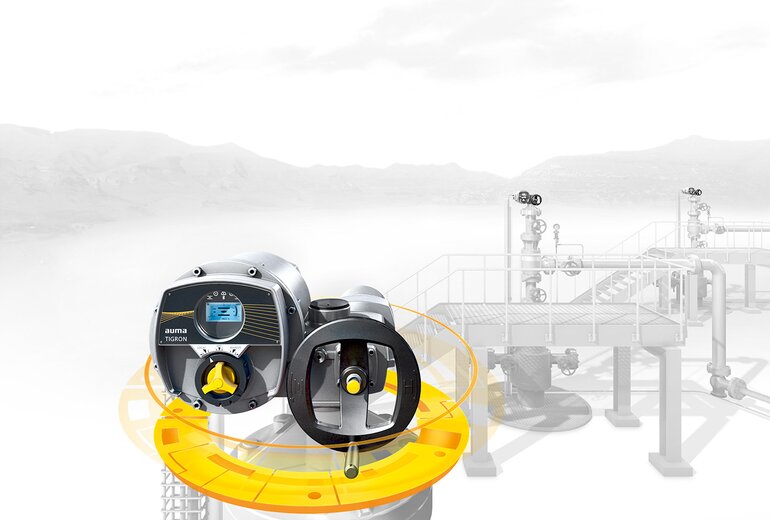
Image: Electric actuator (source: AUMA)
1. Power indicator off after switch-on; no response to the 4-20 mA command
① Check whether the fuse is open with a multimeter; replace it with the same rating if blown. ② Check power terminals for looseness and verify supply voltage. ③ If both are fine but the indicator stays off, the power section of the servo board is likely damaged — replace the board.
2. Protective breaker trips immediately on power-up; servo fuse blown
① With power off, inspect the servo board for short circuits — focus on the rectifier bridge, filter capacitors and thyristors. ② Measure motor winding insulation with a megger to check for burnout or ground fault. ③ Replace damaged components and check for moisture-induced tracking inside the enclosure.
3. Actuator fails to operate despite a valid command signal
① On models with an emergency stop, confirm the E-stop is not engaged. ② Excessive load or a jammed valve may have tripped the torque protection switch — stroke the valve manually first to confirm it moves freely. ③ Motor thermal protection may have operated — allow the motor to cool and auto-reset, then retry. ④ If still no movement, suspect the control board; replace and re-commission.
4. Actuator runs in the wrong direction; feedback direction reversed
① Check the feedback potentiometer wiring for looseness or breakage and the potentiometer for wear. ② Verify the signal-processing circuit on the servo board. ③ On three-phase models, check phase sequence and for a missing phase. ④ Re-terminate wiring and re-calibrate travel and feedback.
5. No movement or no remote control on first commissioning
① Verify power and signal wiring against the wiring diagram (see the product image). ② Confirm 4-20 mA signal polarity and the source's loop drive capability. ③ Check that the control mode (on-off / modulating) matches the actuator type.
II. Mechanical & Environmental Faults (6–9)
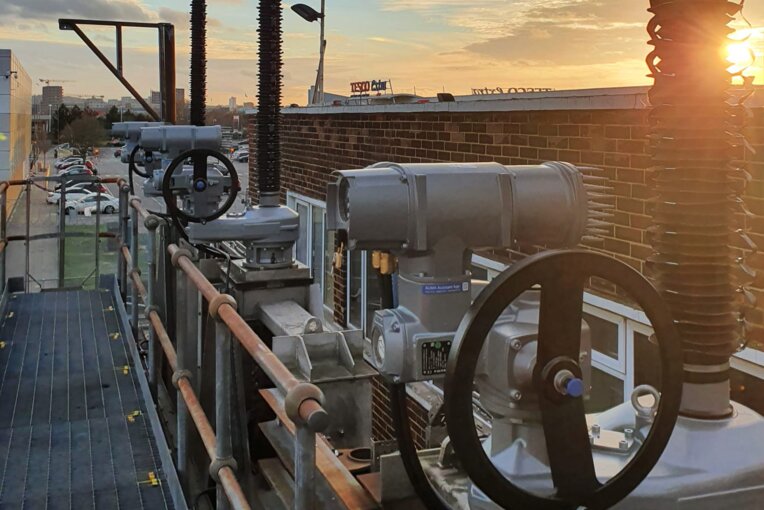
Image: Actuators in operation - AUMA variable speed actuators at a large European wastewater plant (source: AUMA)
6. Motor runs but the valve stem does not move
① The manual/auto changeover clutch jammed in the manual position — the motor just spins. Switch back to electric mode and service the clutch. ② If the motor itself does not run, troubleshoot electrically per the electrical faults above. ③ If neither manual nor electric operation works, inspect the gear train and valve stem for mechanical jamming.
7. Valve sticks mid-travel; torque protection trips repeatedly
① Stroke the valve by hand and check whether packing is over-tightened or the trim is scaled and sticking. ② Check gearbox lubrication and bearings; re-grease or replace. ③ For valves idle for a long time, stroke slowly through full travel several times before returning to automatic.
8. Water ingress; corroded, shorted circuit boards
① Focus on cable gland seals and cover gaskets — water creeping along motor leads through the gland is the most common path. ② Replace moisture-damaged boards and motors, dry the enclosure and re-seal properly. ③ Fit rain covers for outdoor or wash-down installations.
9. Motor overheating; trips during operation
① Continuous high-duty modulation in hot seasons causes overheating — improve ventilation and verify the valve's actual torque demand is within the actuator rating. ② If thermal protection operated, let the motor cool and reset before restarting. ③ For frequent reversing duty, verify the selected torque margin is sufficient.
10. Routine Maintenance Checklist (recommended quarterly)
① Inspect seals and cable glands; ② Re-tighten power and signal terminals; ③ Check gearbox lubrication and re-grease per manual; ④ Measure motor winding insulation resistance; ⑤ Verify travel, torque and position feedback calibration; ⑥ Clean potentiometer / position sensor contacts.
Regular maintenance markedly reduces actuator failure rates. We supply spare parts and repair support for all major actuator brands — contact us for help.
Source: Compiled from public technical references including wsdeme, Wuhan Huayi DCL, Covna and snfamen.com — for maintenance personnel reference.